
5 Pieces of Evidence
5 Pieces of Evidence reflects on missing persons, urban myths, transitoriness, maps, and global networks
5 Pieces of Evidence reflects on missing persons, urban myths, transitoriness, maps, and global networks

In Sarai Reader 03: Shaping Technologies, technology takes the centre-stage as a multi-faceted constellation of ideas, images, reflections, debates, histories and provocations. The book reframes “technology” not as a distant expert domain but as a lived, contested field. It charts the series’ trajectory from its encounter with free‑software publics to urban infrastructures to ask how […]

Documentary images of accidents, smog, crowds, police check posts, evictions, phone booths, bus stations, cyclists and communication infrastructure are positioned in counterpoint to legal excerpts and administrative notes

A sound work about moving into, and circulating within the city of Delhi – a magnet as well as a springboard for daily migrations. Delhi is a city that wakes up to new arrivals everyday

OPUS (Open Platform for Unlimited Signification) Software | 2022 OPUS (Open Platform for Unlimited Signification) was an online space for people, machines, and codes to play and work together – to share, create and transform images, sounds, videos and texts. Opus was an attempt to create a digital commons in culture, based on the principle of […]

In listing a set of latitude and longitude measurements, bracketed by two calendar years, this installation names a citycalled Delhi and a time that feels like the first two years of the twenty-first century
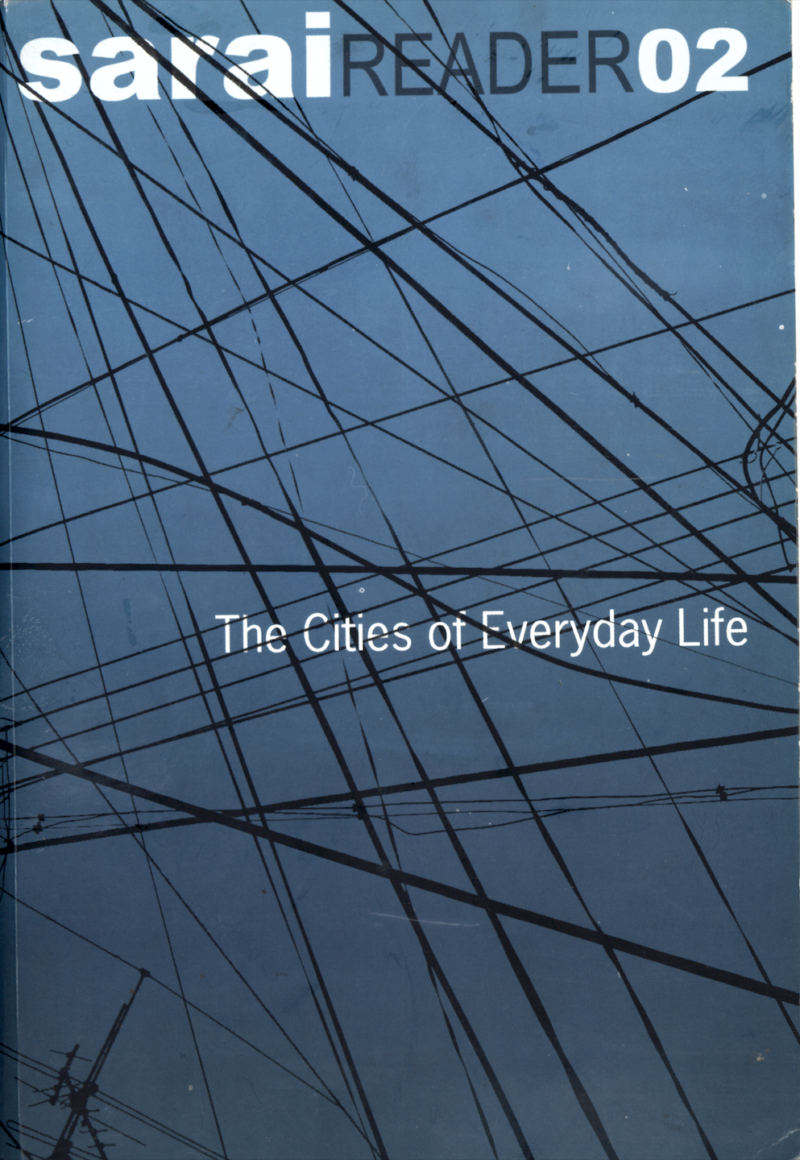
The second book in the ‘Sarai Reader’ series takes off from where the first book ends. This text argues to take the urban seriously. It begins by addressing a dearth of city-focused writing in South Asia, asserting that rapid globalisation has propelled urbanism to the forefront of cultural and scholarly discourses. The book positions itself […]

The History & Practice of Cinematography in India is a collection of transcripts of interviews with veteran and working cameramen, texts, archival photographs, production stills, bibliography, a timeline and other resources on the history of cinematographic practice in India.
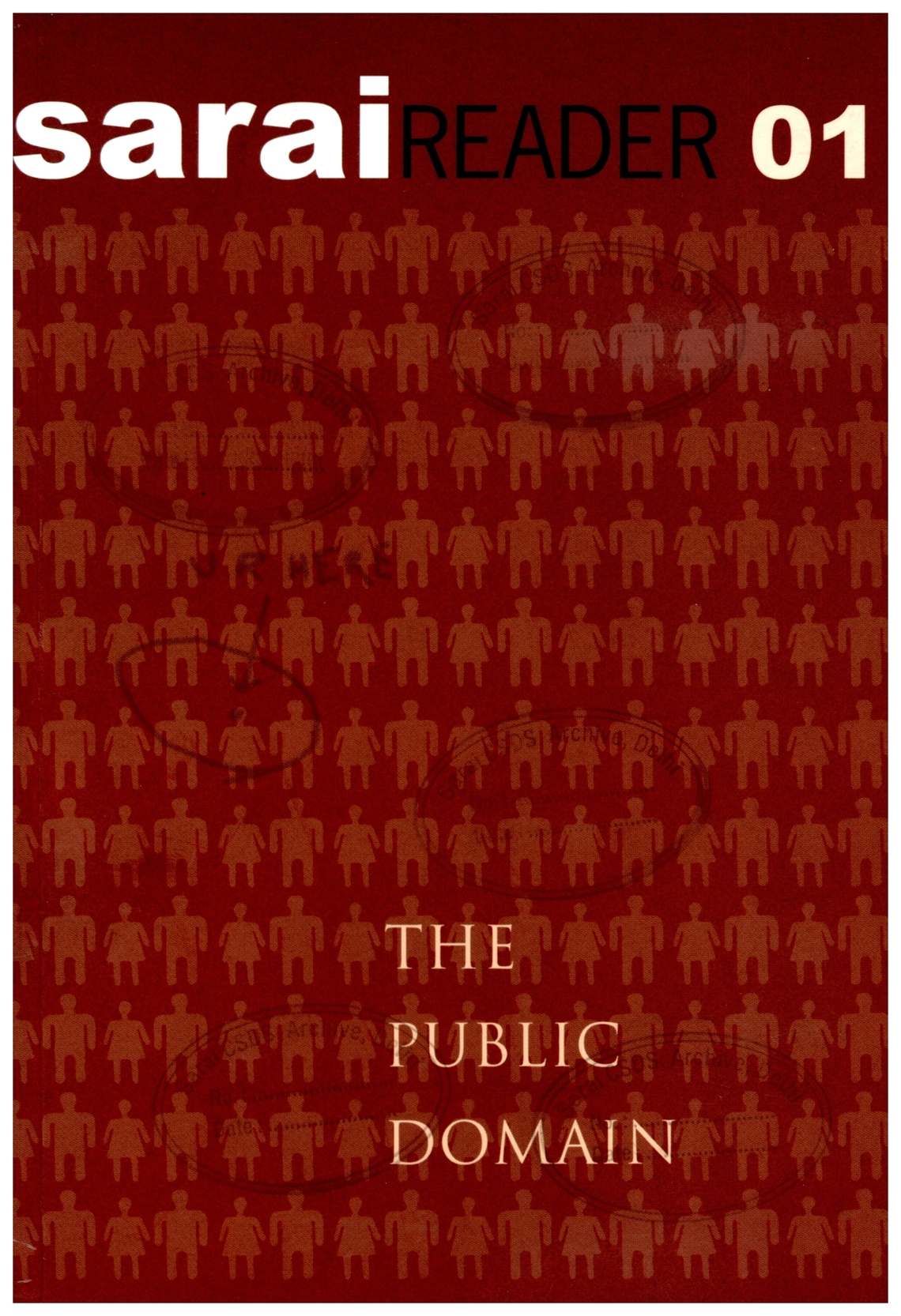
This inaugural volume in Sarai’s reader series explores the layered meanings of the Public Domain through interwoven dialogues, essays, and FAQs. It opens with email exchanges that challenge conventional notions of publicness—moving from physical spaces like bazaars and streets to digital commons and free software culture. Drawing on historical, legal, and vernacular understandings, the text […]
Text by Raqs, Published in Sarai Reader 01, The Public Domain, Sarai CSDS, Delhi 2001

Series of possibilities in the words that constitute the statement Please Do Not Touch the Work of Art are prised open by rearranging them to form statements of an almost identical length, that bear very different attitudes

GVHM 1.0 is an eccentric assemblage of material found in web searches that suggests the fragility of the body, especially the labouring body in cyberspace
Text by Raqs, Published in ‘Double Take: Looking at Documentary’, 2000
In the mid‑90s, one of Raqs’ earliest projects took shape with the 13‑part documentary series Growing Up for Doordarshan’s Channel 3. The series captures the childhood journeys of 13 prominent figures—from artists and writers to scientists, psychologists, social scientists, puppeteers, and theatre directors