The word ‘para’ suggests a relationship to something that stands beside or runs tangential to another. Our ‘para-practices’ include writings and conversations that unfold in proximity—alongside other works, ideas, and processes. These may take the form of a ‘Sourcebook’ that helps stage public, discursive moments for a world with plural knowledge; a ‘Curation,’ the process of which unfolds with many, over time, to reapprehend the world; or a ‘Studio’ with students to reimagine the generative potential of margins and thresholds.

Black Waters: An Event Shaped Hole

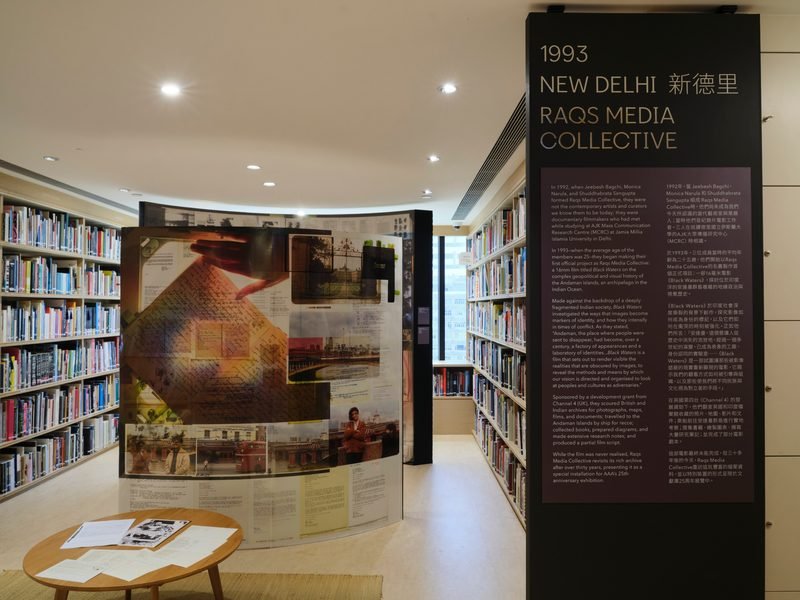
Black Waters, a film-essay which began in 1993, returns into view as a new installation; holding the distance between 1993 and the present, allowing the unfinished film, its fragments and the archive that formed around it to meet again.
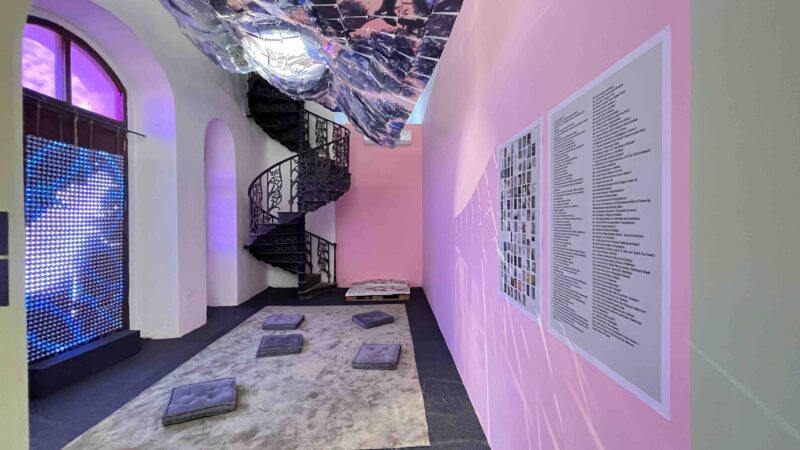
The Time is Never Ripe

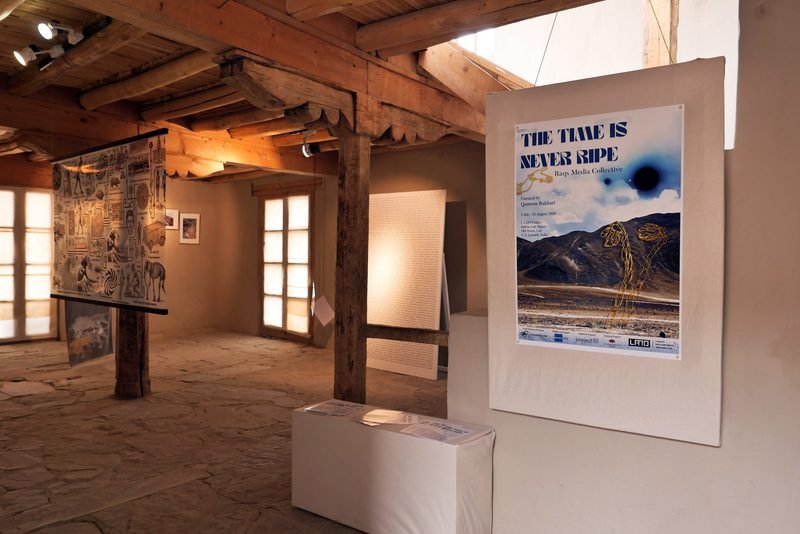
The Time is Never Ripe unfolds across two floors of the seventeenth-century building, the Ladakh Arts and Media Organisation (LAMO) in Leh, bringing our practice into conversation with the changing conditions of life in Ladakh.

As Tranquil As Can Be

As Tranquil as Can Be lingers between the intervals of noise and speech. It is a place to rest, share, linger, and gather under a canopy, thinking through tranquility and what stirs or stays still as and when life begins and ends. 

Biting Tongue, Biding Time

Published as a part of ‘Intensification,’ a collaboration between e-flux and the Lisbon Architecture Triennial within the context of its seventh edition, “How heavy is a city?,” curated by John Palmesino and Ann-Sofi Rönnskog (Territorial Agency), 2025.

18 Personae

18 Personae (2025) continues the long dialogue with cities drawing on conversations, bringing together figures both real and spectral, all that makes and remakes the city every day.

The Parable of the Step Well

Published in – ‘Thirst: In Search of Freshwater’, edited by Ellen Johl, published by The Wellcome Collection, 2025, in accompaniment to ‘Thirst : In Search of Freshwater’ curated by Janice Li, at the Wellcome Collection, London. Pages 89 – 93

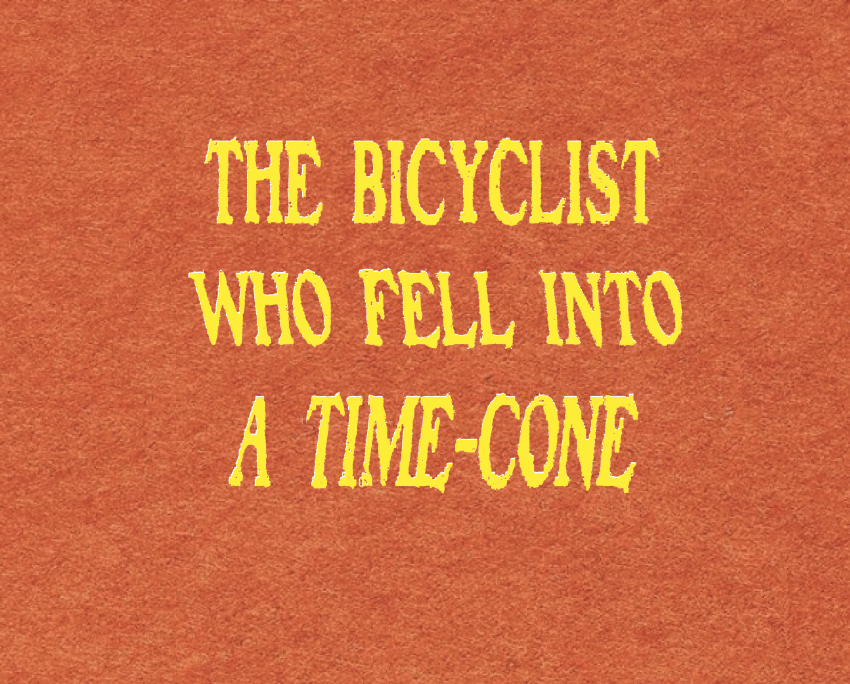
The Bicyclist Who Fell into a Time-Cone

The Bicyclist Who Fell into a Time-Cone, published by Jencks Foundation (2023), takes the form of an artist book, and foregrounds text over image. Mirroring the film’s visual textures, the five voices in the pamphlet register varying distances from what is seen on the screen and its potential elucidations: voiceover, description of images, words on screen, added layers of annotations and meta-annotations.

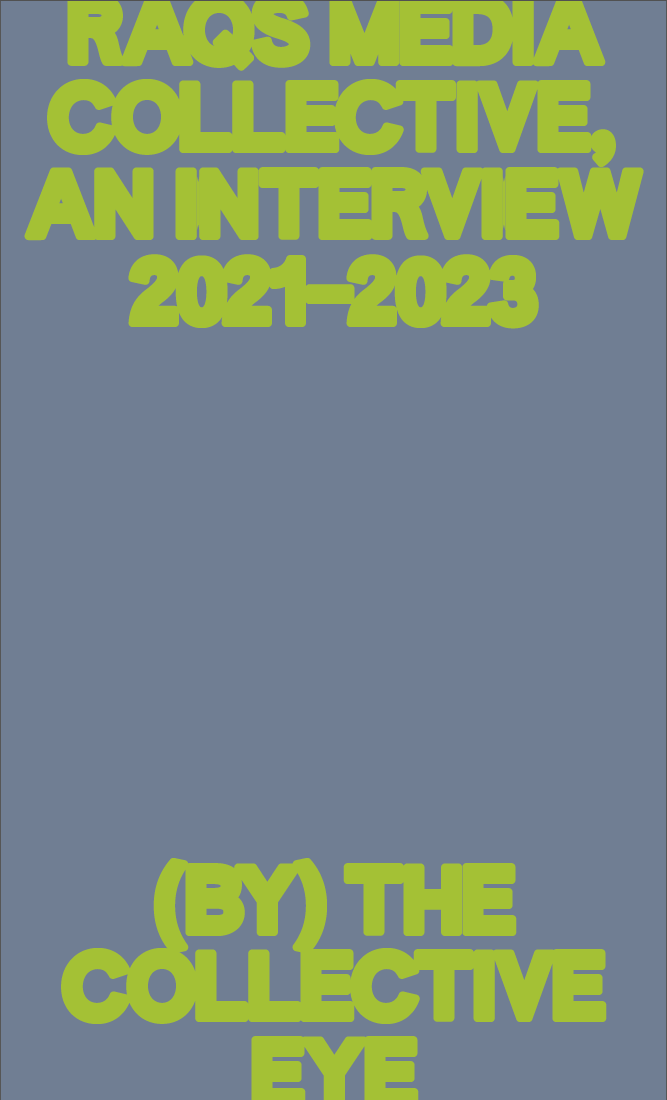
An Interview

The Collective Eye interviews Raqs Media Collective and delves deep into their early days, influences, and experiences

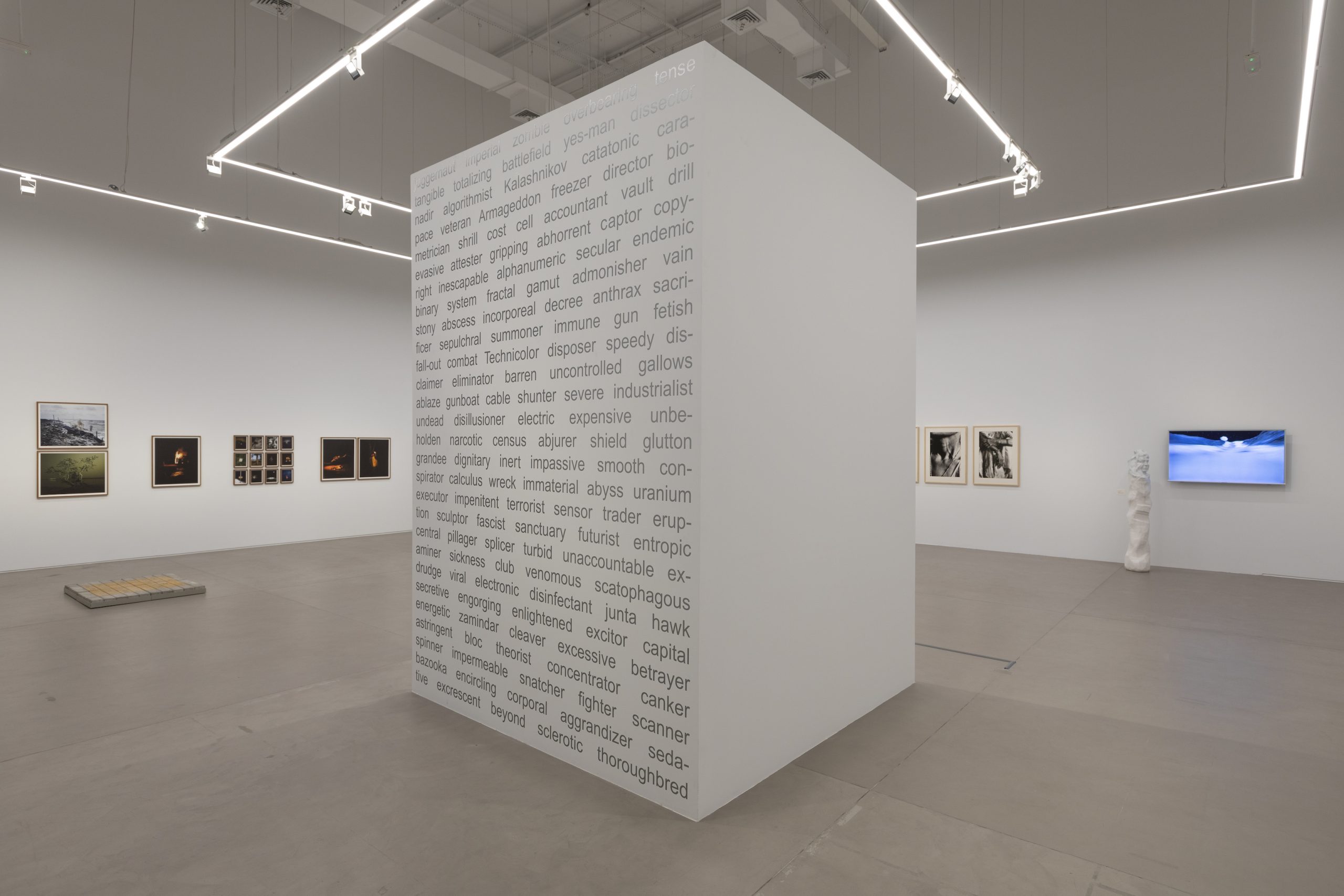
An Infra-vocabulary for Capital

Upright board with an inscribed ‘Infra-Vocabulary’ of a selection from Raqs Media Collective’s synonyms for capital, taken from their work – ‘A Dying Man Sings of That which Felled Him’ (installation with video and inscriptions, 2006) which was subsequently published in their book, ‘Seepage’ (Sternberg Press, 2009) 

Practising Collectivity: What is possible and not yet forbidden?

This interview reflects on the conditions, thresholds, and frictions that shape collective work—within and beyond institutions, publics, and time. Raqs draws from their own processes to consider how collectivity is practiced, stretched, and sometimes tested. The conversation thinks through the limits of what can be done together, and what remains open, despite constraint. Published in […]