

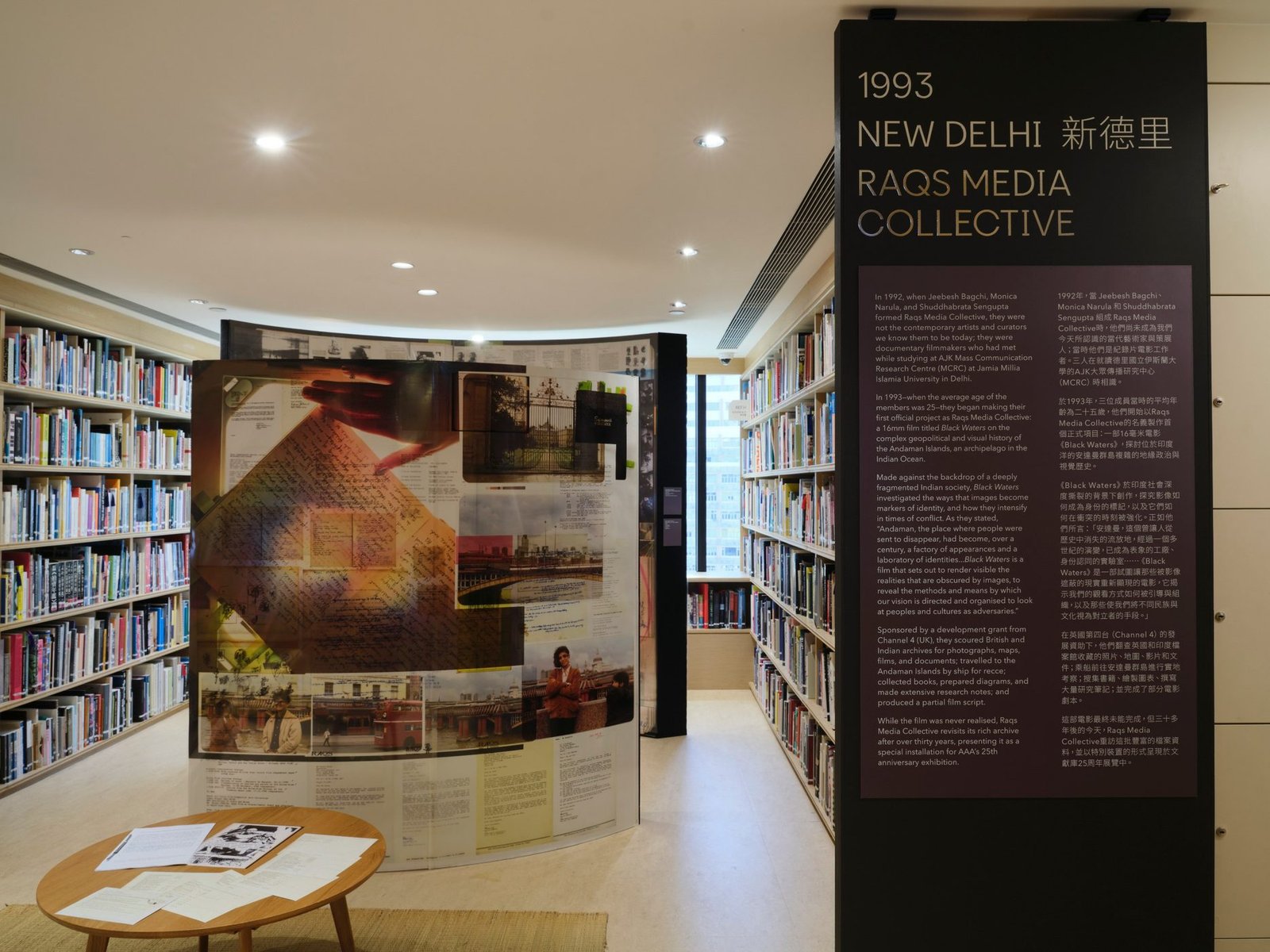
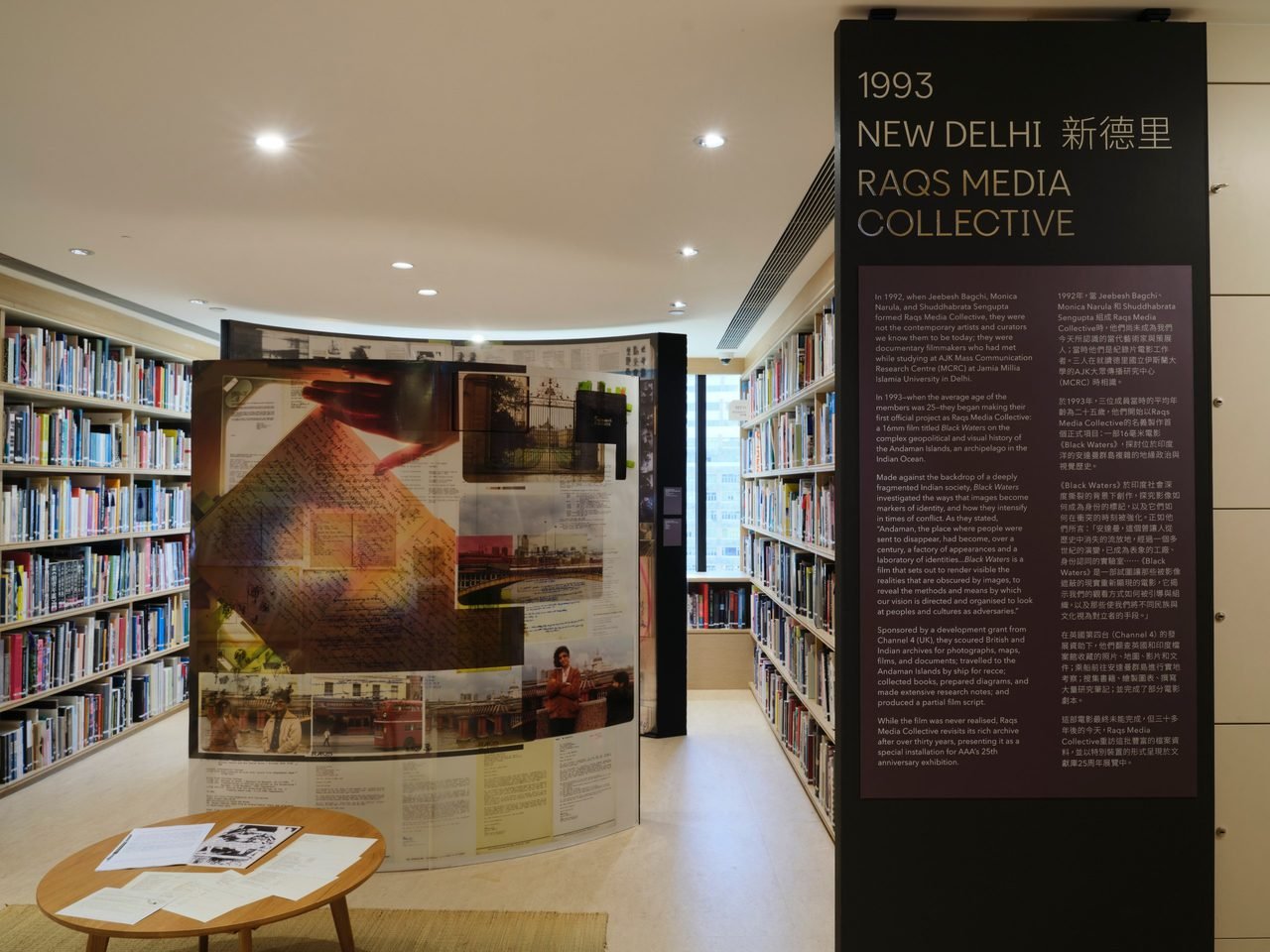
Black Waters: An Event Shaped Hole, 1993/2026
Shown at: ‘25: Artists’ Early Worlds, Part II,’ Asia Art Archive, Hong Kong
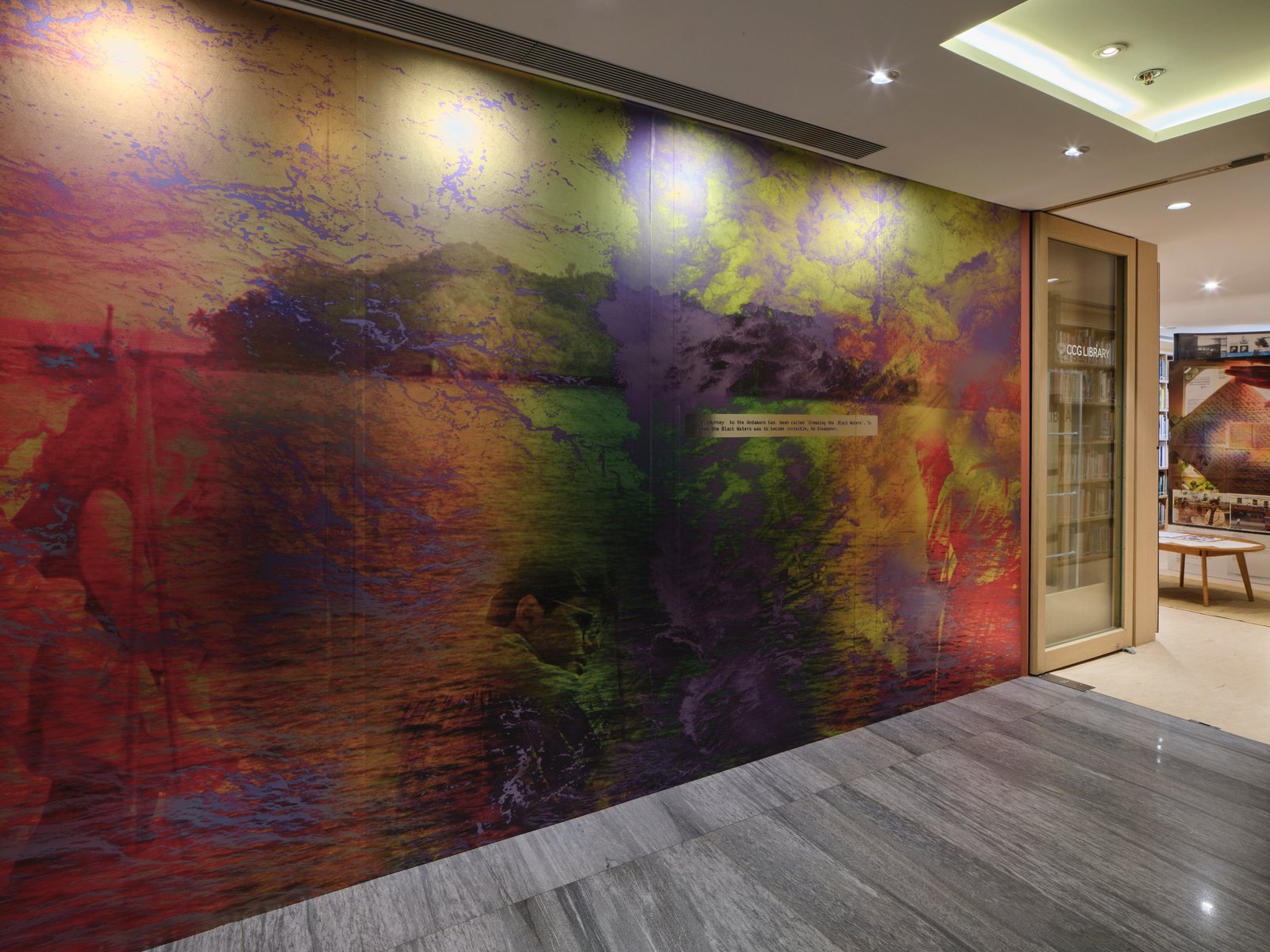
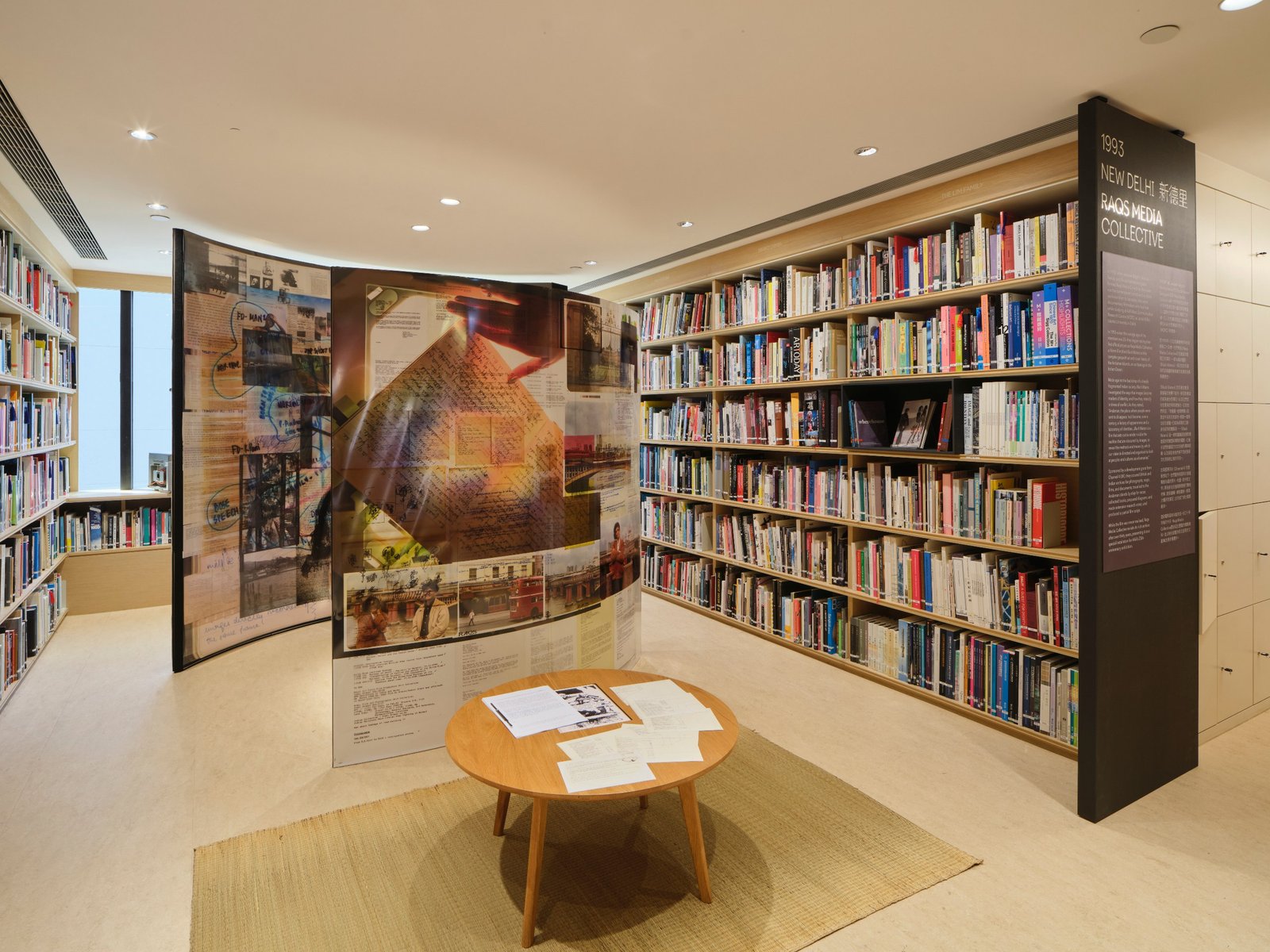
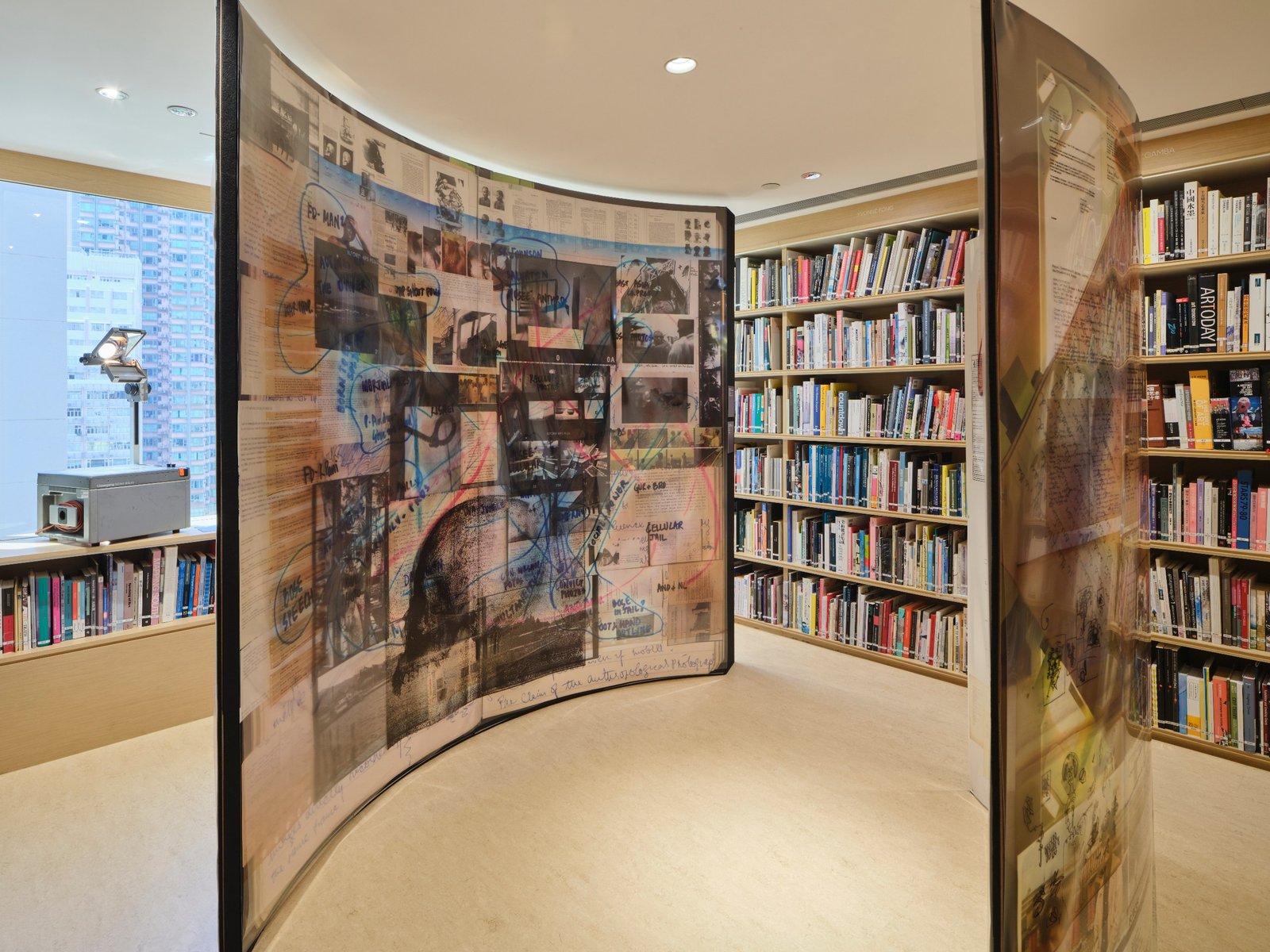
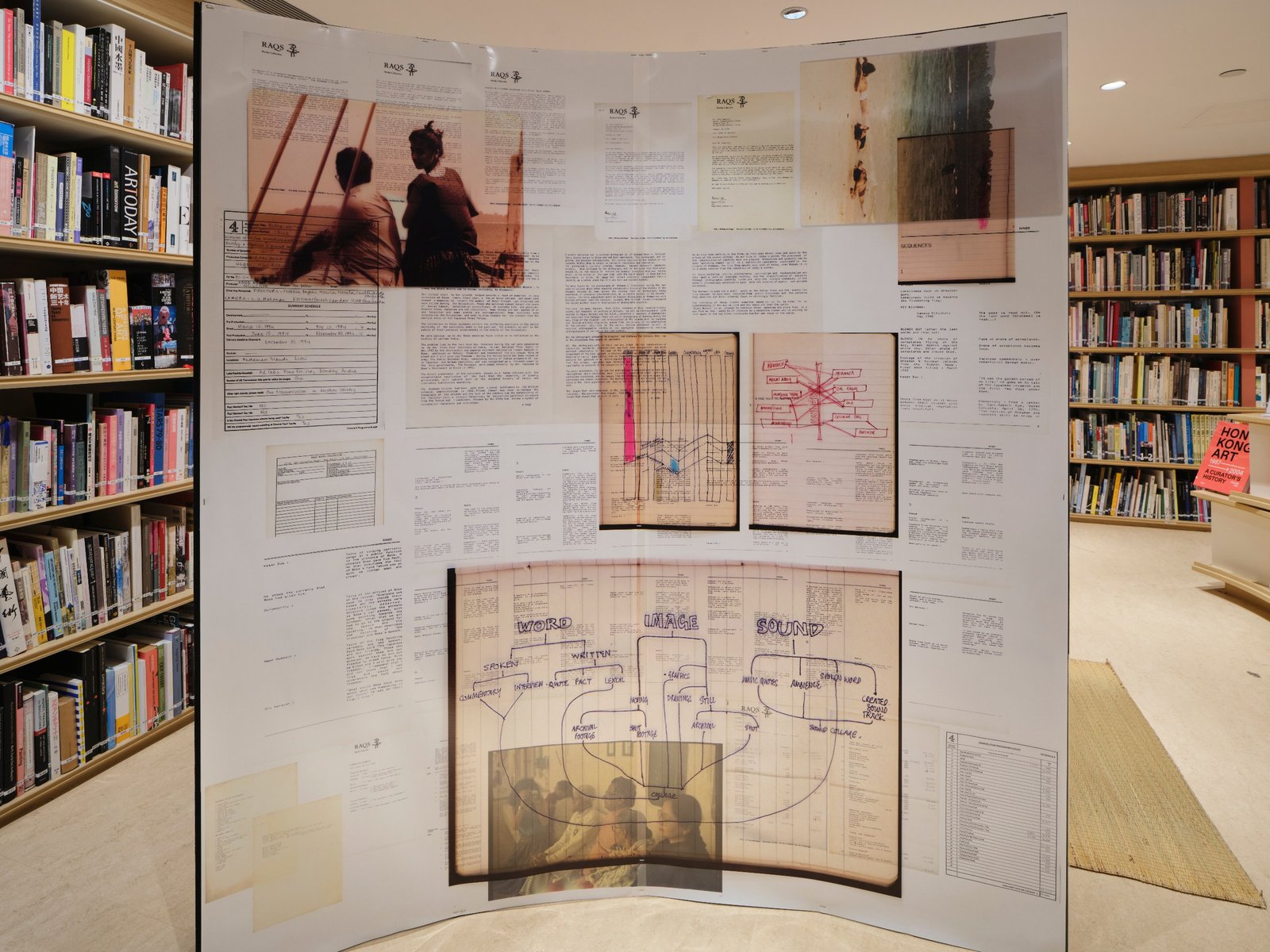
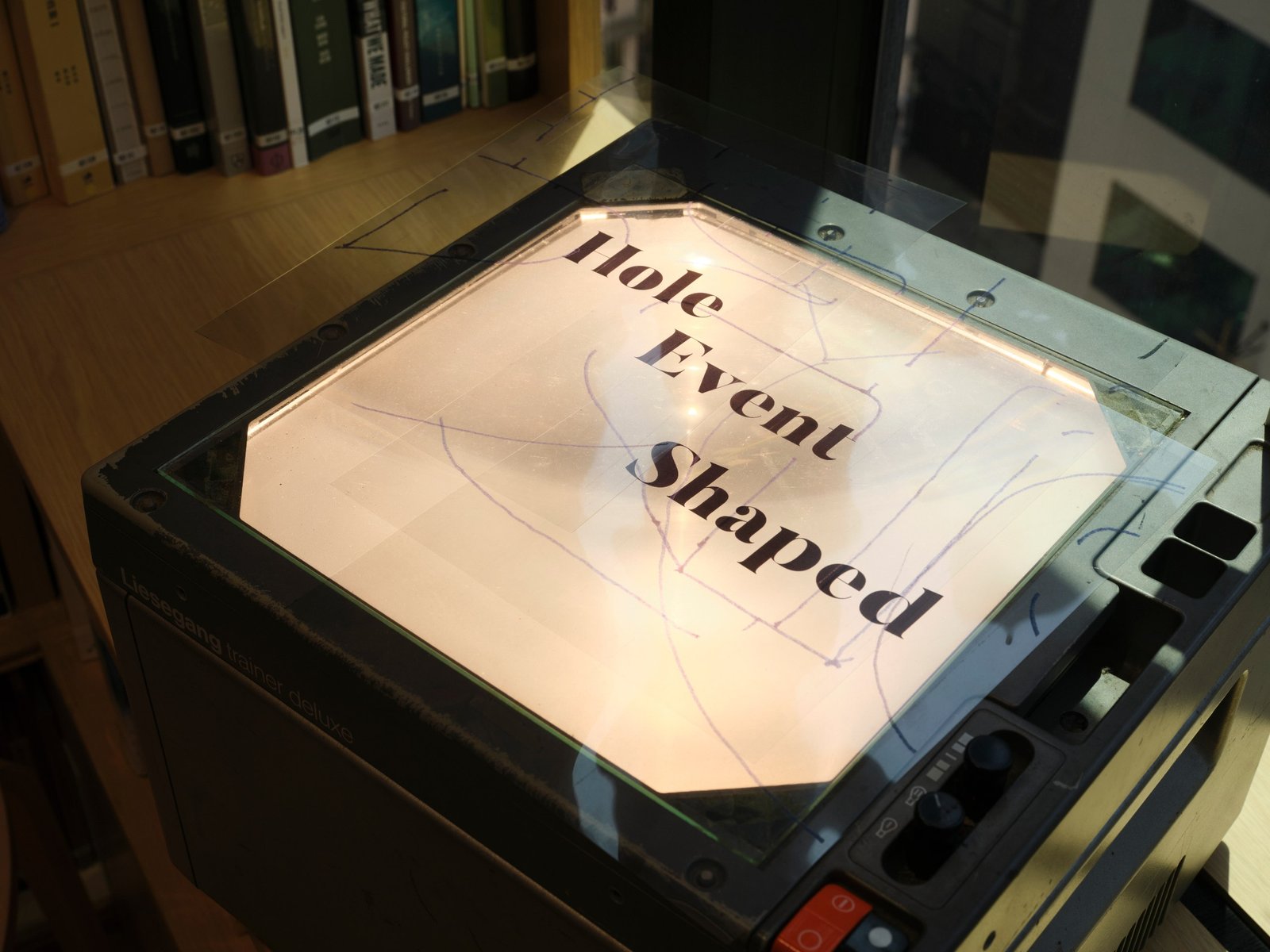
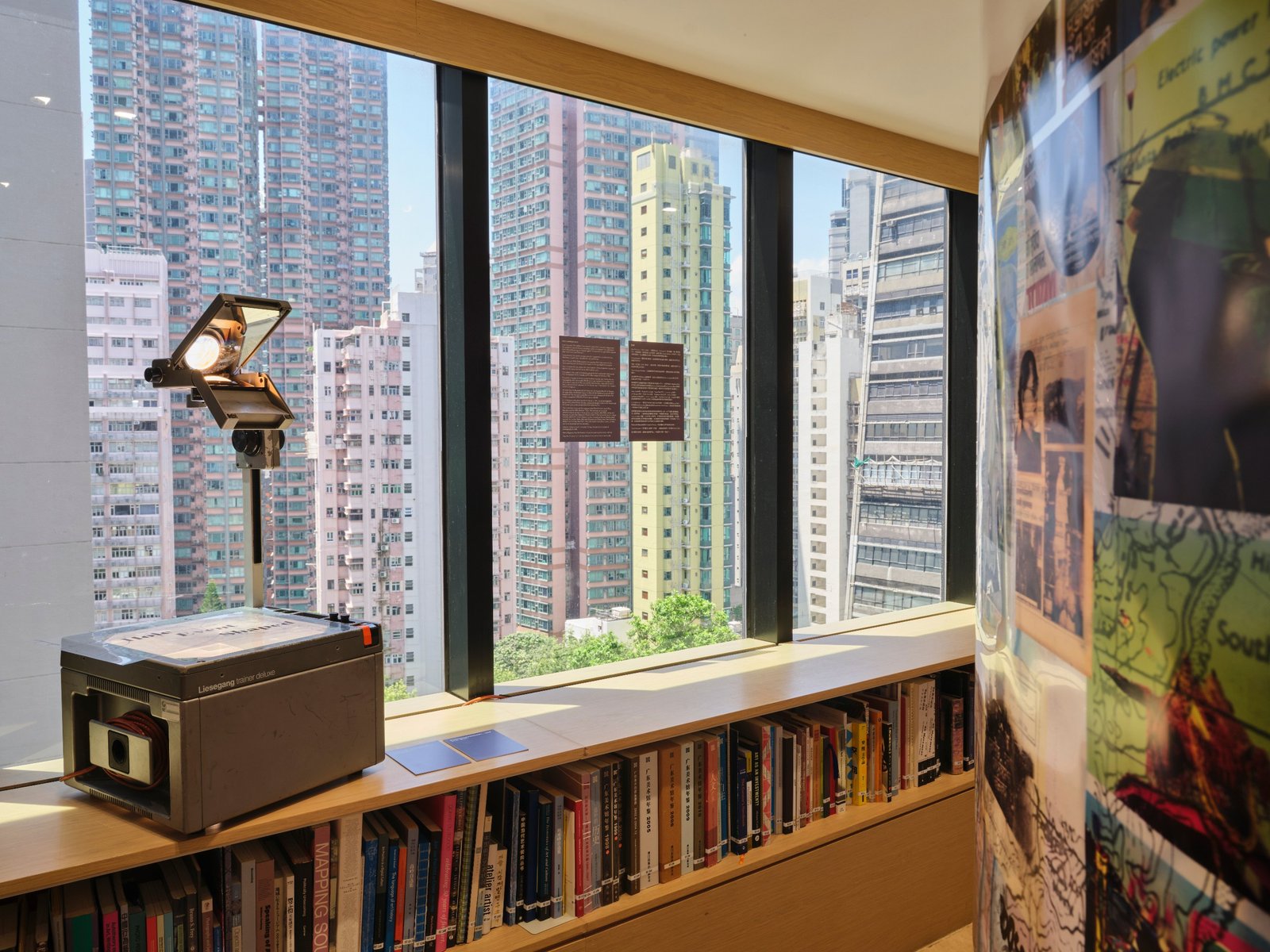
Two curved panels, print on clear film (plastic) and Epson matte, overhead projector, OHP sheets
91.3x 86.6 inches, 61.6 x 62.9 inches
“In making an install from our archive of a film-essay unfinished over three decades, and going over our conversations around the footage we had shot in Kolkata, we stumbled into a time warp:
The work proposed in 1993 was looking at an island through archival images and live narrators. These are now archive, the entire material trace of our collecting, making, thinking act is now inside a formal archive. The move from analog, to digital, to analog, to digital repeats itself. The journey was faded then, and is now back in a new form, ignited into visibility of another kind. This specific shape of time is both puzzling and wonderous.”
Black Waters began in 1993 with an attempt to look at the Andaman Islands through images as our first project. The islands offered a thinking into how images shape what can be seen. The Andamans has been a place where people were sent to disappear. Over time, it had also become a factory of appearances, where photographs, maps, films and official histories accumulated around the islands, produced particular ways of seeing their people and cultures.
The film emerged from a concern with what an image does once it begins to stand in for a person, a place or a people. How does an image become an identity? What happens when that identity becomes fixed, especially in times of conflict? Black Waters set out to examine the forces that gets built around the act of seeing, and to make visible what disappears behind the image.
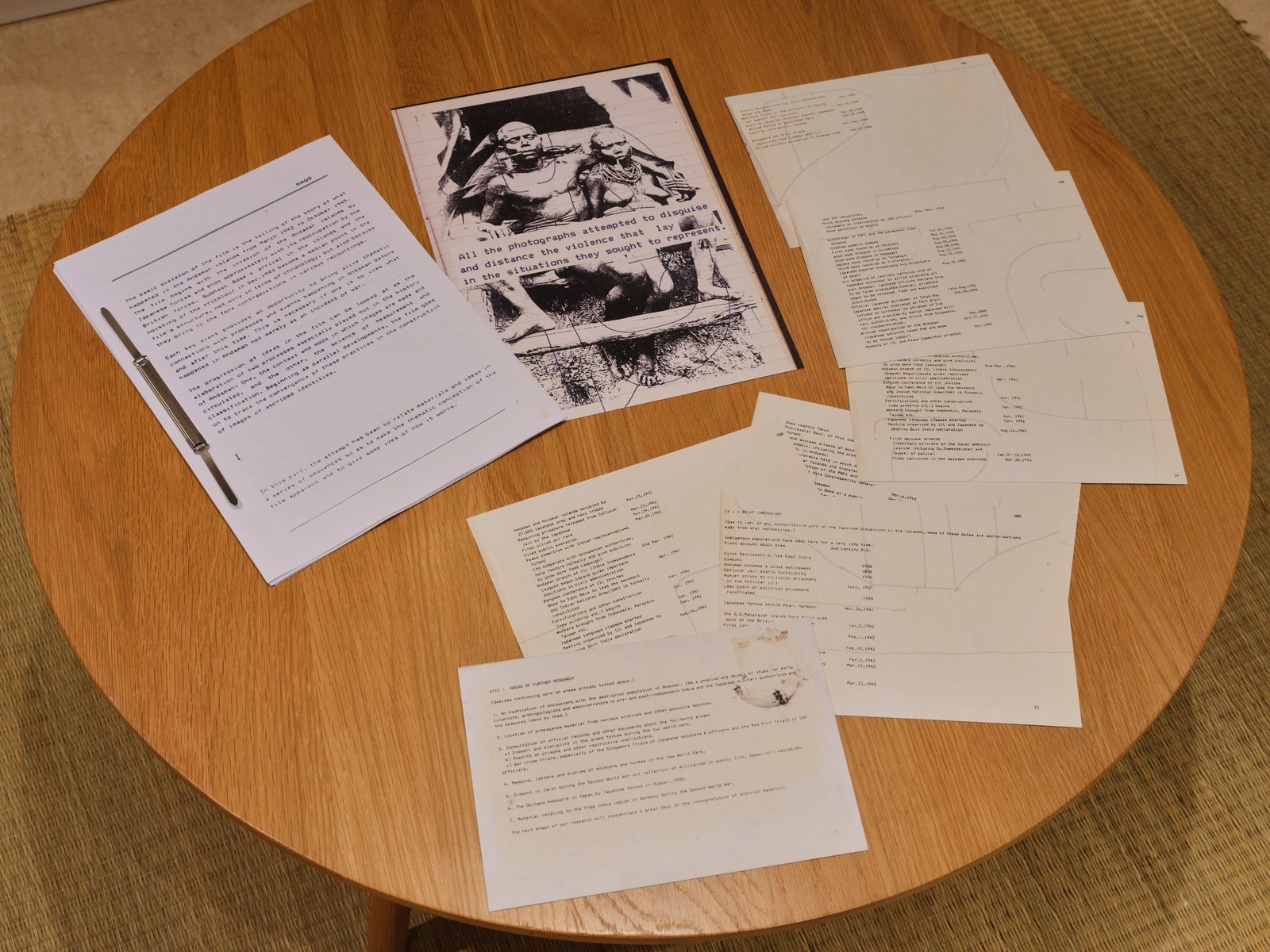
Research for the film spread across British, Japanese, and Indian archives. Photographs, maps, films and documents were gathered; books were collected, diagrams drawn, notes accumulated and a partial script developed. A journey to the Andaman Islands by ship followed, along with a recce and the shooting of footage in Kolkata.
That unrealised project became the point from which Black Waters: An Event Shaped Hole took shape today. More than thirty years later, the material assembled around the film has found itself to become an archive. The research, the footage, the notes, the diagrams, the conversations and the images have written down a history of its own.
This creates a peculiar reversal; a project once set out to look at an island through archival images and live narrators. Decades later, that act of looking has entered the archive itself. What was once being collected for the making of a work has become the material through which that work can now be encountered. Analogue gave way to digital and digital returned to analogue, with the same materials passing through different forms as time moved on.
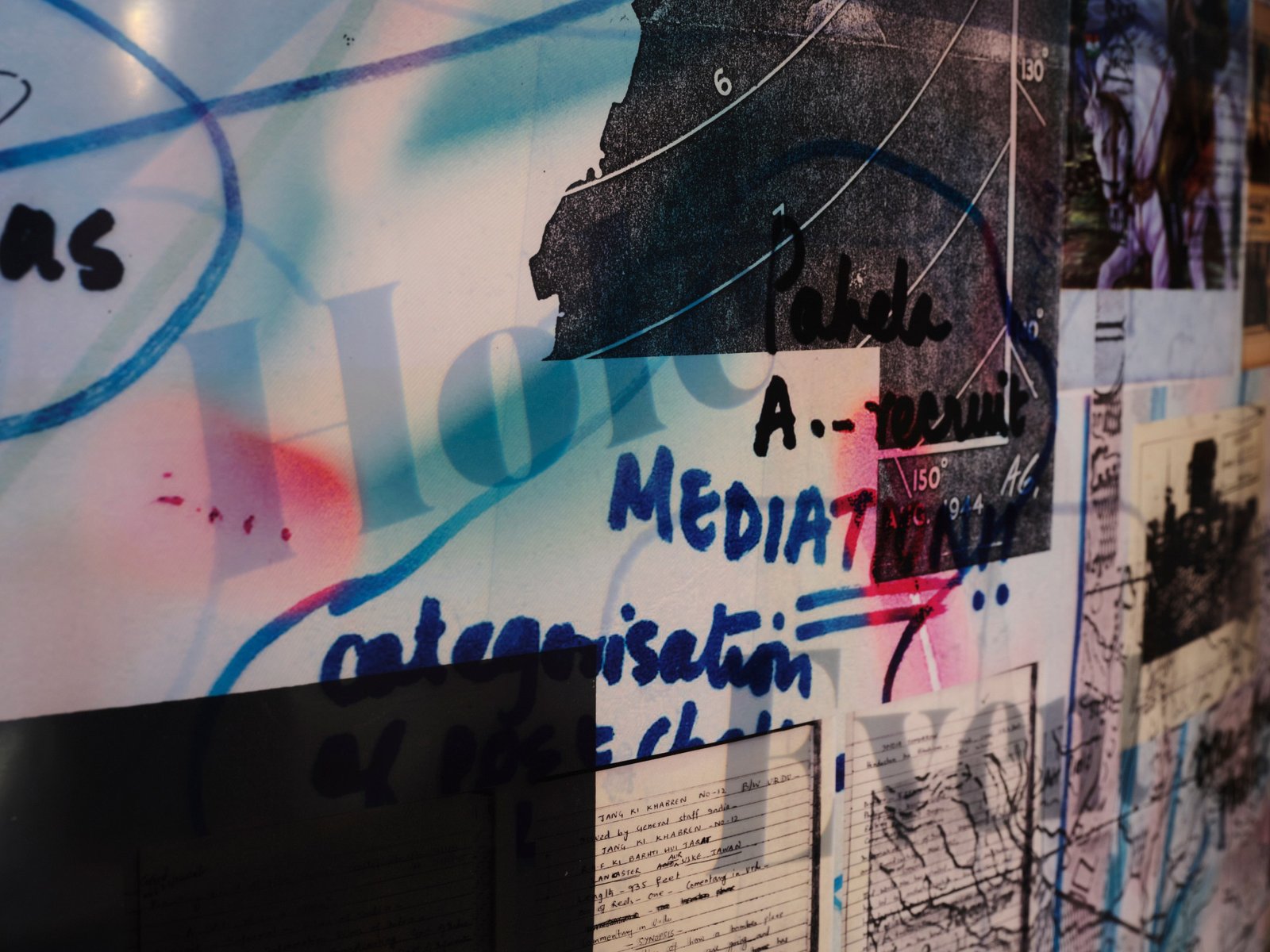
The work found itself being dispersed into sequences, as the film was imagined to be. Wall panels inviting viewers to experience film documents, treatment plans, equipment lists, correspondences on one side and the extensive archival materials, perusing reports, documents, images, maps on the other. On the other panel, one could find themselves rereading the history of the islands on one side and the historical evidences of the war witnessed by the place and the people on the other. All of this interspersed with diagrams which was drawn to visually plot the film and images frozen in time.
For Asia Art Archive’s 25th anniversary, Black Waters: An Event Shaped Hole brings this work back into view as a new installation; holding the distance between 1993 and the present, allowing the unfinished film, its fragments and the archive that formed around it to meet again.
The absence of the original film becomes part of what the installation makes present. What had to be left incomplete, continued to gather time around itself, and now returns in a form that could only have emerged decades later.
Credits:
Raqs Studio: Shamsher Ali, Moomal, Ananta Jain
Asia Art Archive, New Delhi: Noopur Desai, Pallavi Arora, Sunil Kumar Mahawar, Sumedha Gupta and Shubha Bhatt for help with scanning documents from the archive of Black Waters.
Concept: Anthony Yung
Curatorial Team: Christina Bartosch and Hazel Kwok
Research & Archives Team: Jang Hyejung, Sophia Lam, Park Sunho, Sneha Ragavan, and Shafia Yousaf
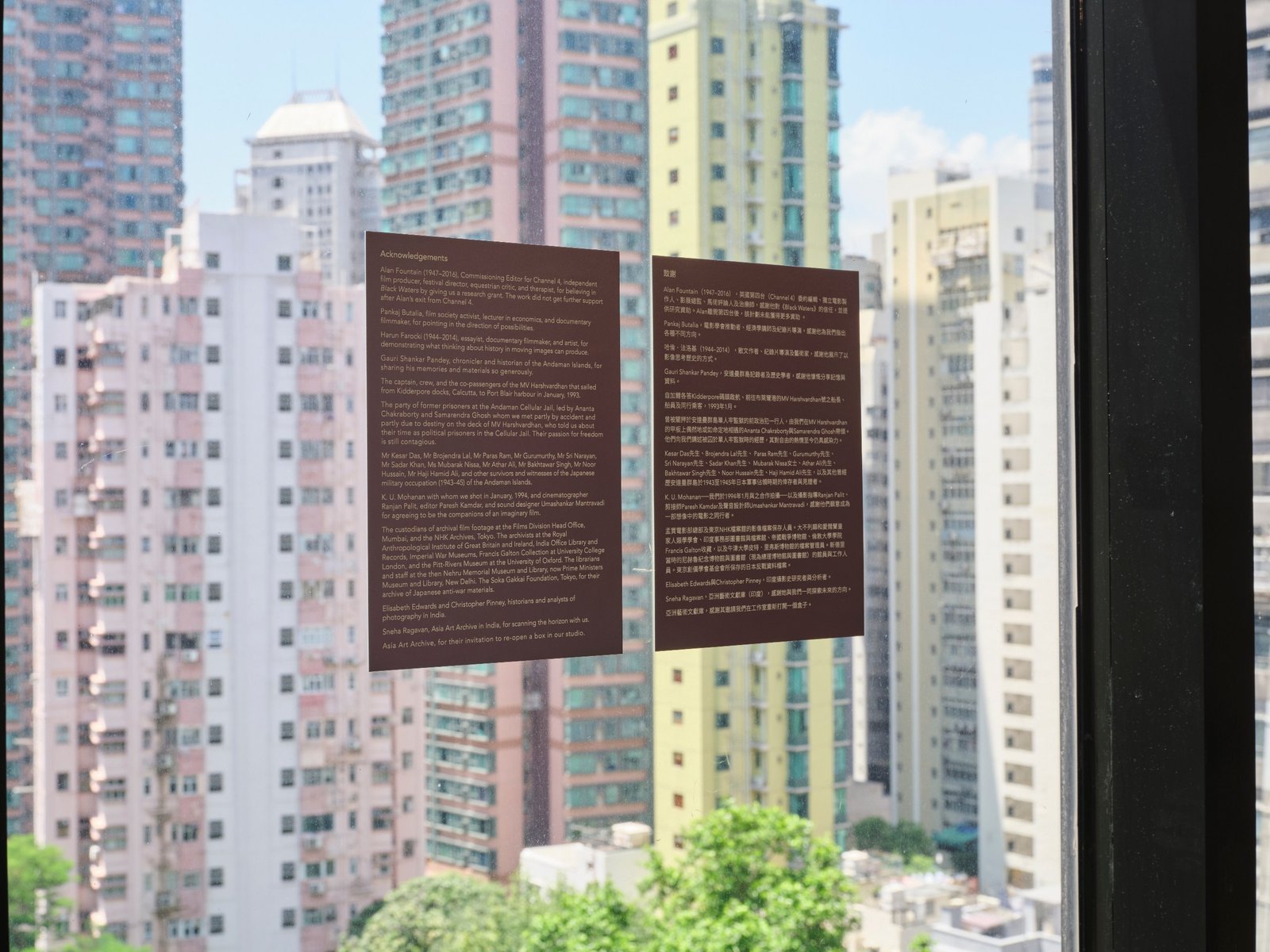
Acknowledgements:
Alan Fountain (1947-2016) – Commissioning Editor for Channel 4, Independent Film Producer, Festival Director, Equestrian critic, Therapist – for believing in Black Waters by giving us a research grant. The work did not get further support after Alan’s exit from Channel 4.
Pankaj Butalia, film society activist, lecturer in economics, and documentary filmmaker, for pointing in the direction of possibilities.
Harun Farocki (1944 – 2014) essayist, documentary filmmaker, artist, for demonstrating what thinking with history in moving images can produce.
Gauri Shankar Pandey, chronicler and historian of the Andaman Islands, for sharing his memories and materials so generously.
Captain, crew and the co-passengers of the MV Harshvardhan that sailed from Kidderpore docks, Calcutta to Port Blair harbor in January, 1993.
The party of former prisoners of the Andaman Cellular jail, led by Ananta Chakraborty and Samarendra Ghosh whom we met, partly by accident, partly due to destiny on the deck of MV Harshvardhan, who told us about their time as political prisoners in the cellular jail. Their passion for freedom is still contagious.
Mr Kesar Das, Mr Brojendra Lal, Mr Paras Ram, Mr Gurumurthy, Mr Sri Narayan, Mr Sadar Khan, Ms Mubarak Nissa, Mr Athar Ali, Mr Bakhtawar Singh, Mr Noor Hussain, Mr Haji Hamid Ali and other survivors and witnesses of the Japanese military occupation (1943-1945) of the Andaman Islands.
K.U. Mohanan with whom we shot in January, 1994 and Ranjan Palit (cinematographers), Paresh Kamdar (editor) and Umashankar Mantravadi (sound designer) for agreeing to be the companions of an imaginary film.
Custodians of archival film footage at the Films Division head office, Mumbai, & NHK News television archives, Tokyo.
Archivists at the Royal Anthropological Institute, India Office Library and Records (Blackfriars Road), Imperial War Museum, Francis Galton Collection, University
College of London and the Pitt-Rivers Museum, Oxford. Librarian and Staff at the Nehru Memorial Museum and Library, Delhi.
The Soka Gakkai Foundation, Tokyo for their archive of Japanese Anti-War materials.
Elisabeth Edwards and Christopher Pinney, historians and analysts of photography in India
Asia Art Archive, Hong Kong, for the invitation to re-open a box in our studio.
Sneha Ragavan, (Asia Art Archive in Delhi) for scanning the horizon with us.